 AI Arena
Data Science
Seven Python libraries for the time series stack
A tour of the tools that cover statistical forecasting, machine learning pipelines, deep learning, and anomaly detection.
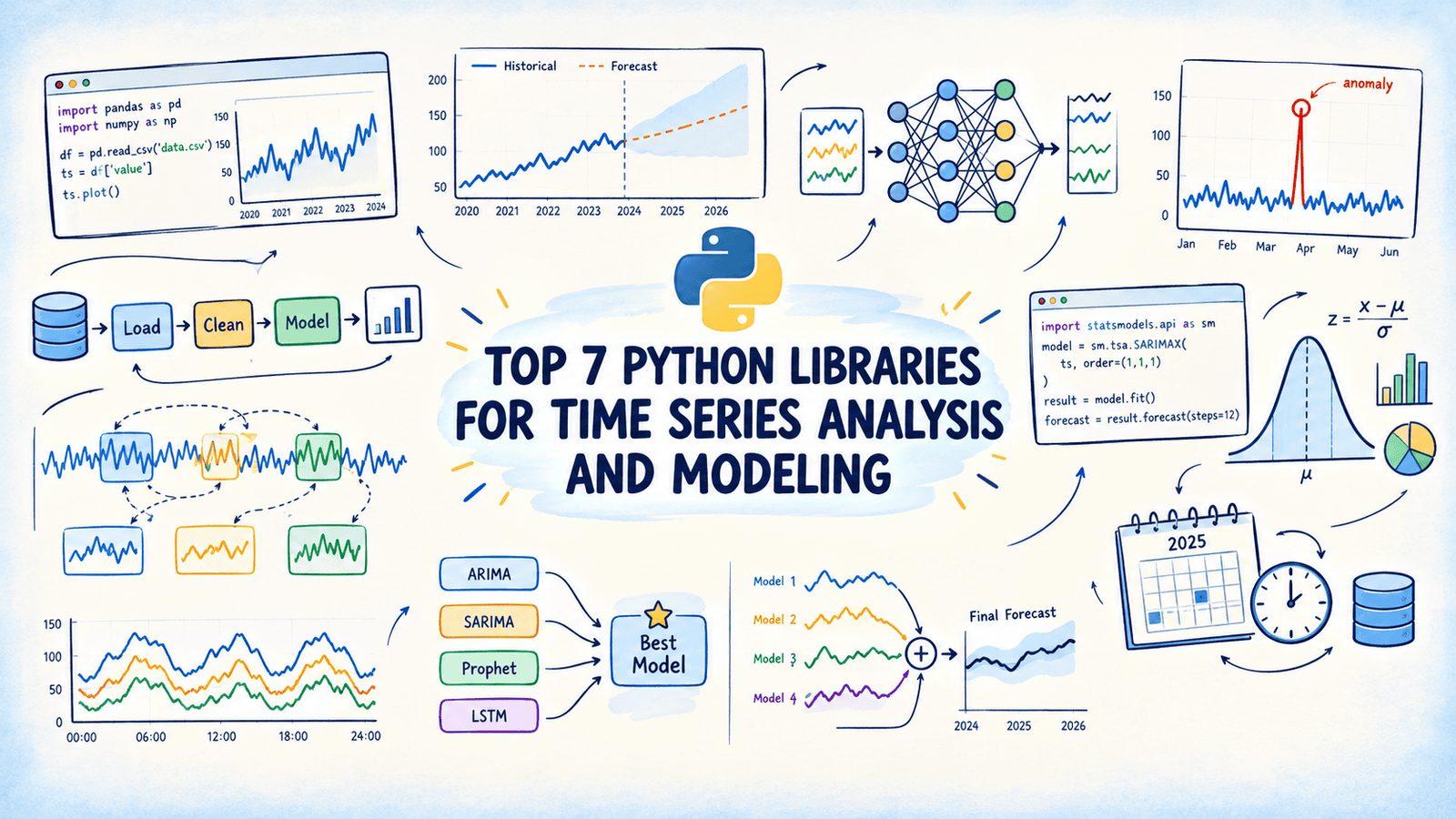
Python's time series ecosystem is fragmented by design. A new guide from KDnuggets maps seven libraries to the jobs they do best. statsmodels remains the starting point for interpretable statistical models, with the full ARIMA family, exponential smoothing, and diagnostics. pmdarima automates ARIMA order selection and fits into scikit-learn pipelines.
For broader workflows, sktime offers one interface across forecasting, classification, and clustering, with time-series-aware cross-validation. Darts bundles classical and deep learning models with probabilistic forecasts and anomaly detection. stumpy uses a matrix profile to find motifs and discords without labels, while PyOD collects more than 60 anomaly-detection algorithms under one API.
NeuralForecast covers deep learning at scale, with more than 30 neural architectures and global training across many series. The guide's advice is practical: try several libraries on the same dataset and compare results. The differences in assumptions often teach more about the data than a single benchmark score.