 AI Arena
Research
A benchmark for the messy work of wet labs
OpenAI and Ligo test whether AI agents can read gels, plates, and microscope images without overconfidence.
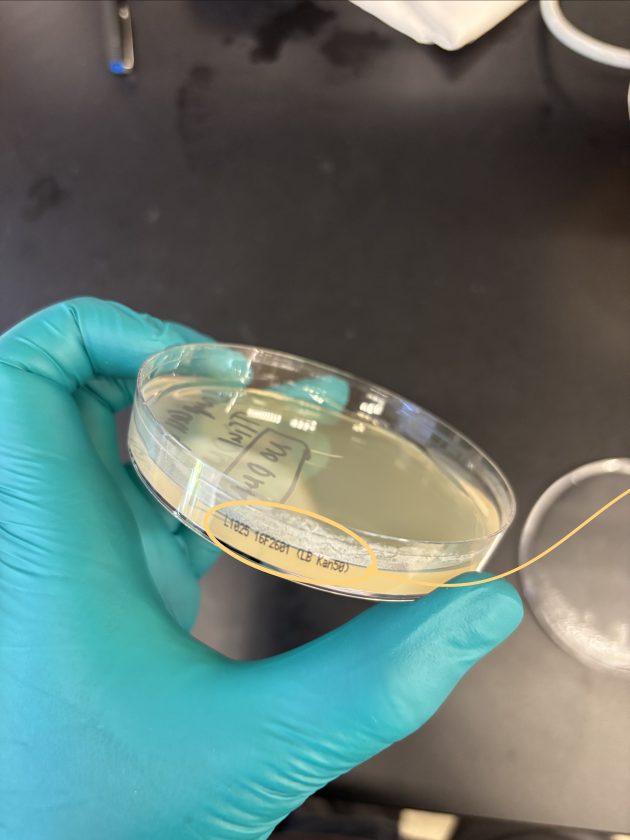
OpenAI and biotech company Ligo have released BioBasicsBench, a set of 100 tasks that test how well AI agents interpret raw experimental data. The inputs include gel and blot images, colony plates, microscopy stacks, sequencing reads, plate-reader exports, and videos of bench work. The tasks cover protein methods, imaging, assays, nucleic acid work, and molecular cloning.
The benchmark is designed to reward careful analysis rather than a plausible answer. Agents must return a conclusion, measurement, or recommendation, and they are scored against expert-written rubrics. Some tasks test whether a model recognizes that the evidence cannot support a conclusion. At the highest reasoning setting, GPT-6 Astra earned 66.7% of available credit, compared with 43.8% for GPT-5.6 Sol.
The failures are instructive. Astra sometimes let a familiar assumption override experimental controls, discounted data that contradicted its preferred reading, and miscounted colonies by about 12%. Those errors matter because a misread image or an ignored control can send a lab down the wrong path.